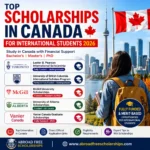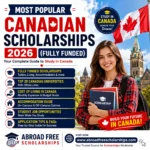

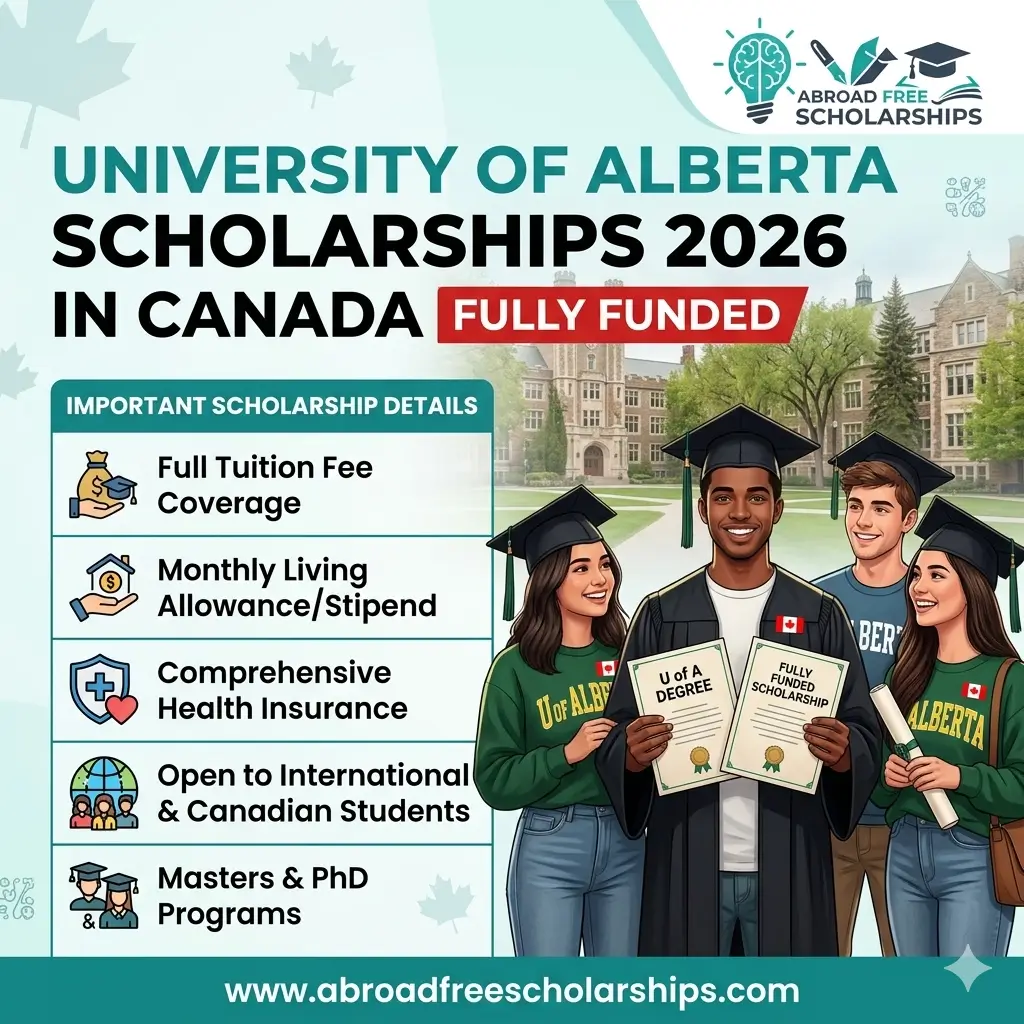
University of Alberta (UAlberta) in Canada is offering scholarships for 2026 to both international students and Canadian citizens for undergraduate, master’s, and PhD programs. It claims there are fully funded options, lists various scholarship types and their values, study fields offered, eligibility criteria, application deadlines, and instructions on how to apply.
🎓 Scholarship Overview
- University: University of Alberta
- Location: Canada
- Scholarship Level: Undergraduate, Master’s, PhD
- Coverage (claimed): Fully funded (tuition + stipends)
- Nationality: All nationalities
- Last Date / Intake Deadlines: July 1 (Sep intake), Nov 1 (Jan intake), Mar 1 (May intake), May 1 (Jul intake) — different cycles annually
💰 Financial Benefits Listed
According to the BrightScholarship summary:
- International Student Scholarships: up to $9,000 for new undergraduate students (payable over four years)
- Gold Standard Scholarship: up to $6,000 for top 5% academic achievers
- Doctoral Recruitment Scholarship: $5,000/year for PhD students
- Master’s Degree Entrance Scholarship: About $17,500 + additional $10,000 fee coverage for international Master’s students
- Graduate Excellence Scholarship (AGES): $15,000 for Master’s/PhD students
⚠️ These figures are taken from the BrightScholarship summary page and may be illustrative — the official University of Alberta site does not list these exact awards in a unified page. Always verify on the official awards pages listed below.
- University: University of Alberta
- Degree level: Undergraduate, Masters, PhD
- Scholarship coverage: Fully Funded
- Eligible nationality: All Nationalities
- Award country: Canada
- Last date: 1 November 2026
Step-by-Step Application Guide for University of Alberta Scholarships
2026 Based on the experiences of successful international applicants, the following roadmap can significantly improve your chances of receiving admission and scholarship consideration at the University of Alberta.
- Research Your Program Early: Begin researching your preferred degree program 8–12 months before the application deadline. Carefully review admission requirements, language requirements, and scholarship eligibility criteria.
- Prepare Academic Documents: Collect official transcripts, degree certificates, passport copies, English language test scores, and other supporting documents in PDF format.
- Create a Strong Academic Profile: Focus on maintaining excellent grades. Competitive scholarships at the University of Alberta are generally awarded to students with outstanding academic records.
- Apply for Admission First: Most University of Alberta scholarships are linked to admission. Submit your application as early as possible because many funding opportunities consider early applicants first.
- Prepare a Professional CV: Include academic achievements, research experience, internships, leadership activities, volunteer work, and publications if applicable.
- Secure Strong Recommendation Letters: Request recommendation letters from professors, supervisors, or employers who can genuinely evaluate your academic and professional abilities.
- Write a Compelling Motivation Letter: Explain your academic goals, research interests, career plans, and why the University of Alberta is the right fit for your future.
- Submit All Documents Before Deadlines: Double-check every uploaded document. Missing documents are among the most common reasons applications are delayed or rejected.
- Monitor Your Application Portal: After submission, regularly check the university portal and email account for updates, additional requests, and scholarship notifications.
- Prepare for Scholarship Interviews: Some competitive funding opportunities may require interviews. Be ready to discuss your academic background, goals, leadership skills, and future contributions.
Expert Tip: Students who apply early often have more scholarship opportunities available than those who wait until the final deadline.
Common Mistakes to Avoid When Applying for University of Alberta Scholarships
- Submitting incomplete application documents.
- Using a generic motivation letter for multiple universities.
- Ignoring program-specific admission requirements.
- Waiting until the final week to submit applications.
- Uploading low-quality or unclear scanned documents.
- Providing weak recommendation letters from individuals who barely know your academic work.
- Failing to explain research interests clearly for graduate programs.
- Not checking email regularly after submission.
- Including grammatical errors and spelling mistakes in application materials.
- Exaggerating achievements or providing inaccurate information.
Remember: Scholarship committees evaluate not only academic excellence but also professionalism, attention to detail, and overall application quality.
Tips for Writing a Winning Motivation Letter for University of Alberta Scholarships
A strong motivation letter can distinguish your application from hundreds of other candidates. Follow these proven strategies:
- Start with a Powerful Introduction: Briefly introduce yourself and explain your academic interests.
- Show Alignment with the University: Explain why the University of Alberta is the ideal institution for your educational goals.
- Highlight Academic Excellence: Discuss key achievements, research projects, awards, publications, and leadership experiences.
- Explain Your Future Goals: Demonstrate how the scholarship will help you contribute to your field, community, or country.
- Discuss Research Interests: Graduate applicants should clearly identify research areas and potential faculty alignment.
- Demonstrate Impact: Show how your education at the University of Alberta will create meaningful social, scientific, or economic impact.
- Be Authentic: Scholarship committees appreciate genuine stories and realistic goals rather than overly dramatic statements.
- Keep It Concise: Focus on quality rather than length. Every paragraph should provide value.
Introduction → Academic Background → Achievements → Research/Career Goals → Why University of Alberta → Scholarship Impact → Conclusion
How to Get an Accommodation Voucher as an International Student
Although accommodation vouchers are not automatically provided to all international students, several practical strategies can help reduce housing costs during your studies in Canada.
- Apply for University Residence Early: Early applicants often receive priority consideration for campus housing opportunities.
- Check Scholarship Benefits Carefully: Some faculty-funded awards and graduate assistantship packages may include housing support or living allowances.
- Contact International Student Services: They regularly share information regarding temporary housing assistance, discounts, and community housing resources.
- Explore Graduate Funding Packages: Many research-based Master’s and PhD students receive stipends that can significantly offset accommodation expenses.
- Join Student Housing Networks: University-approved housing groups often share discounted accommodation opportunities for new international students.
- Request Financial Aid Guidance: Students experiencing financial hardship may be eligible for emergency support programs or housing-related assistance.
- Look for Residence Promotions: Certain residence facilities occasionally offer move-in incentives, fee reductions, or short-term accommodation discounts.
Practical Advice: Secure accommodation immediately after receiving your admission offer because housing demand in Edmonton can increase significantly before each academic intake.
Complete Breakdown of the University of Alberta Scholarship Interview Process
Most admission-based scholarships do not require interviews. However, prestigious scholarships, research funding opportunities, leadership awards, and faculty-nominated scholarships may include an interview stage.
Stage 1: Shortlisting
- Academic records are reviewed.
- Leadership achievements are assessed.
- Research experience and extracurricular activities are evaluated.
Stage 2: Interview Invitation
- Selected candidates receive an email invitation.
- Interview format may be online via Zoom or Microsoft Teams.
- Candidates receive interview instructions and schedules.
Stage 3: Scholarship Interview
Interview panels typically assess:
- Academic achievements and performance.
- Leadership experience.
- Communication skills.
- Research potential.
- Career goals.
- Motivation for choosing the University of Alberta.
- Ability to contribute to the university community.
Frequently Asked Interview Questions
- Tell us about yourself.
- Why did you choose the University of Alberta?
- What are your long-term career goals?
- Describe a leadership challenge you have overcome.
- How will this scholarship impact your education?
- What research interests do you plan to pursue?
- How do you plan to contribute to your home country after graduation?
Stage 4: Final Evaluation
- Interview performance is combined with academic assessment.
- Final recommendations are submitted to the scholarship committee.
- Successful candidates receive official award notifications.
Ready to Apply for Graduate Studies at the U of A?
Follow this step-by-step guide to successfully prepare and submit your application to any of our graduate programs.
- Step 1: Start early – Begin the process as early as one year before you wish to begin your program of study.
- Step 2: Choose program – Select from more than 500 graduate programs spanning 300 research areas.
- Step 3: Review requirements – Review general entrance requirements and check with your chosen department.
- Step 4: Prepare documents – Ensure all digital supporting materials, transcripts, and language test scores are ready.
- Step 5: Apply online – Clear your browser cache and set aside at least one hour to complete the submission.
Select the appropriate application portal to begin: